The banquet
What was a jinyeon? The Joseon royal banquet behind the show
A celebratory court feast where music and dance had their stage, and the royal protocol books that recorded every cup, costume and instrument.
Reserve your place ↗Quick answer
A jinyeon was a celebratory banquet at the Joseon court, held on auspicious occasions such as national holidays, royal birthdays and anniversaries of a king's accession. Because Joseon had no theatres for performance as pure art, these banquets were where music and dance were staged, and the details were written up afterwards in books called uigwe, royal protocols. The Seoul performance borrows the name and the setting, not a particular feast.
Joseon banquet terms in brief
| Term | What it meant |
|---|---|
| Jinyeon | Celebratory banquet; in a late Joseon study the word also stands for the whole family of celebratory feasts |
| Jinchan | A banquet title meaning offering food |
| Jinjak | A banquet title meaning offering drinks |
| Uigwe | Royal protocol books recording rites and ceremonies, among them banquets |
| Outer banquet | A feast for the king and officials |
| Inner banquet | A feast for royal family members, relatives and titled ladies |
A feast with a stage built into it
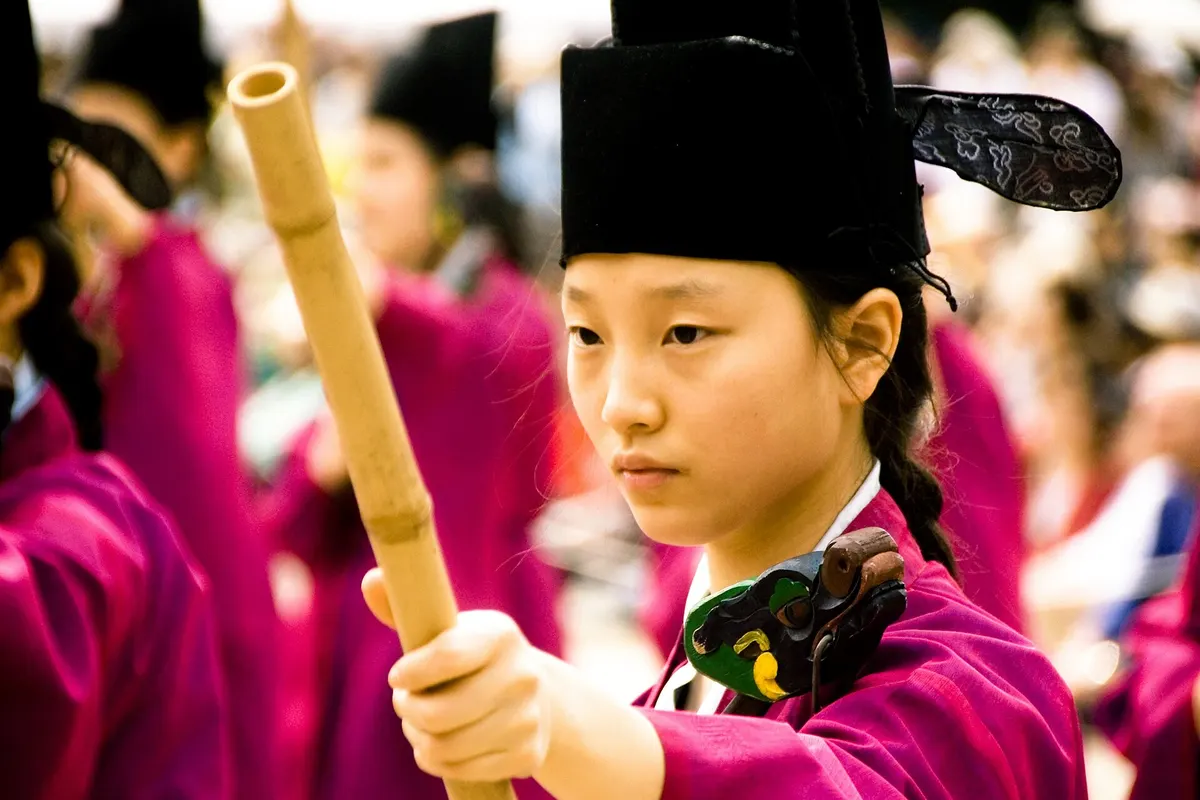
Kim Jong Su's 2008 Korea Journal study begins from a striking point: in the Joseon dynasty there were no theatrical performances for purely artistic purposes, so royal banquets provided the place for music and dance. A banquet needed room for many guests, an orchestra and dancers, so temporary facilities were built in the palace grounds, including a wide makeshift floor for the terrace ensemble to play on. The word jinyeon, offering a banquet, belongs to a small family of titles. The paper reads jin pungjeong as the largest type, followed by jinyeon, jinchan and jinjak, until from the mid-nineteenth century the titles stopped tracking size.
Who feasted, and when
Early in the dynasty the law code Gyeongguk daejeon provided for regular banquets for unity and for the elderly each year, alongside celebratory banquets held often. After King Injo's restoration in 1623 the regular ones nearly vanished, and celebratory banquets were held only on special occasions: the thirtieth or fortieth anniversary of a king's accession, or the fortieth, fiftieth or sixtieth birthday of royal elders. The paper counts nineteen surviving uigwe that concern royal banquets, which is why historians can describe them in such detail.
Inner and outer banquets
The same occasion could be marked by two parties. An outer banquet gathered the king, the crown prince and the officials; the paper says civil and military officials above the third grade sat on the floor of the hall while the rest sat in the courtyard, and the dancers at the terrace ensemble were boys in their early teens. An inner banquet was for the royal family and titled ladies, and there the music and dance were performed by female entertainers, with a curtain separating the women from male musicians after the late eighteenth century.
What the protocol books listed
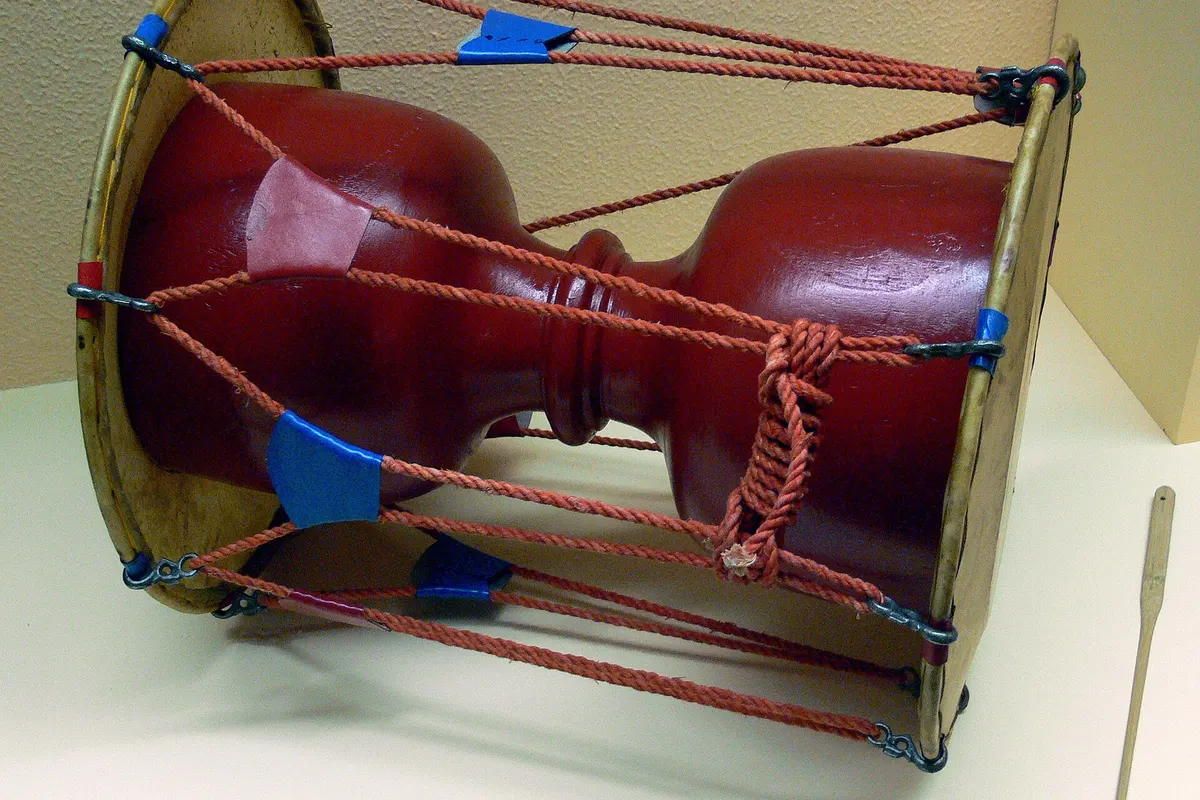
An uigwe is far more than a menu. According to the paper, the banquet volumes cover the temporary office set up to organise the event, the food, the making of musical instruments and costumes, lists of participants, instrument players and dancers, prizes and the accounts. They include illustrations of seating, ceremonial procedure, songs and dances, flowers, ritual dishes and the instruments themselves. The 1848 banquet expense account, for example, assigns 63 percent of its cost to food and 20 percent to musical instruments and costumes. Wikipedia adds that UNESCO added the Uigwe to its Memory of the World programme in 2007.
The last great court banquet
One of the best-documented late banquets is the 1902 feast held by Emperor Gojong at Hamnyeongjeon Hall in Deoksu Palace. The Korea Times reports that it marked the fortieth anniversary of his reign and his entry into Giroso, a society of senior officials, and that it included twelve choreographed dances, musical performances and rituals. Its records survive in the Imin Jinyeondobyeong, a set of standing paintings of the performance sequences, and in the Daeakhubo music scores. In 2021 the National Gugak Center made an immersive artwork recreating it, which the paper trail made possible.
From banquet to hanok room
So what does a performance in a hanok room actually recreate? Nothing as grand as the 1902 feast. The booking page calls it an experience in which a Joseon royal banquet awakens in the city, and it offers the atmosphere rather than the ceremony: traditional instruments, court dress for the musicians, the option to try hanbok and a replica throne. That is a reasonable reading of the word jinyeon for a one-hour booking, and it points to the right expectation: an evocation, not a reconstruction. You will not see a boy ensemble on a makeshift floor, and you will not need to.
Frequently asked questions
What does jinyeon mean?
It means a celebratory banquet at the Joseon court, literally offering a banquet. Late Joseon studies use the word for the whole family of celebratory royal feasts.
Where do we know jinyeon details from?
From uigwe, the royal protocol books, of which nineteen concerning banquets survive according to a 2008 Korea Journal study.
Is the Seoul show a reconstruction of a real banquet?
No. The booking page presents a hanok-style room recreating a royal banquet atmosphere, not a specific historical feast.
Sources