The ritual music
Jongmyo jeryeak: the royal ancestral music that sits behind Seoul's court sound
UNESCO lists the Jongmyo rite and its music as intangible heritage; here is what that ritual is, when it happens, and how it differs from a show.
Reserve your place ↗Quick answer
Jongmyo jerye is a Confucian ritual honouring the deceased kings and queens of the Joseon dynasty at Jongmyo Shrine in Seoul, and jeryeak is the ceremonial music and dance performed with it. UNESCO's intangible-heritage listing says it is held once a year on the first Sunday in May. It is not the same as the Seoul performance; it is the grander, more solemn ancestor of the court-music tradition that a hanok-room show draws on.
Jongmyo in brief
| Topic | Summary |
|---|---|
| What it is | A Confucian ritual of offerings, music and dance for the Joseon ancestors |
| Where | Jongmyo Shrine in central Seoul |
| When | Once a year on the first Sunday in May |
| UNESCO | Proclaimed in 2001; entered UNESCO's intangible-heritage list in 2008 |
| Shrine | Became a World Heritage Site in 1995 |
| Dancers | 64 dancers in eight lines, say UNESCO and Wikipedia |
The shrine itself
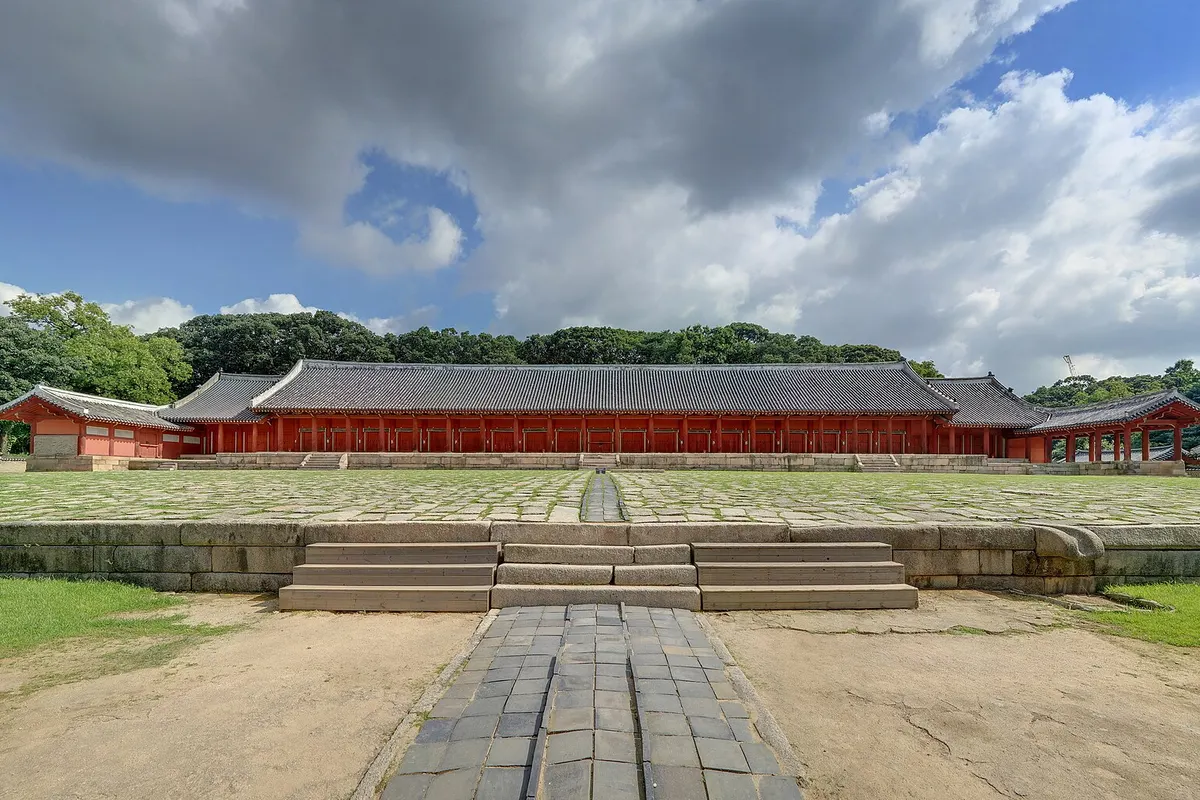
Jongmyo is a Confucian royal ancestral shrine in the Jongno district of Seoul, built in the Joseon period for memorial services for deceased kings and queens. According to UNESCO, it is the oldest royal Confucian shrine preserved, and the ritual ceremonies continue a tradition established in the fourteenth century. Wikipedia says the main buildings went up in October 1394 under King Taejo, were burned in the Japanese invasions of 1592 to 1598 and rebuilt in 1601. The Jeongjeon, its main hall, is a National Treasure and the longest building of traditional design in Korea. The shrine became a World Heritage Site in 1995.
The ritual and its music
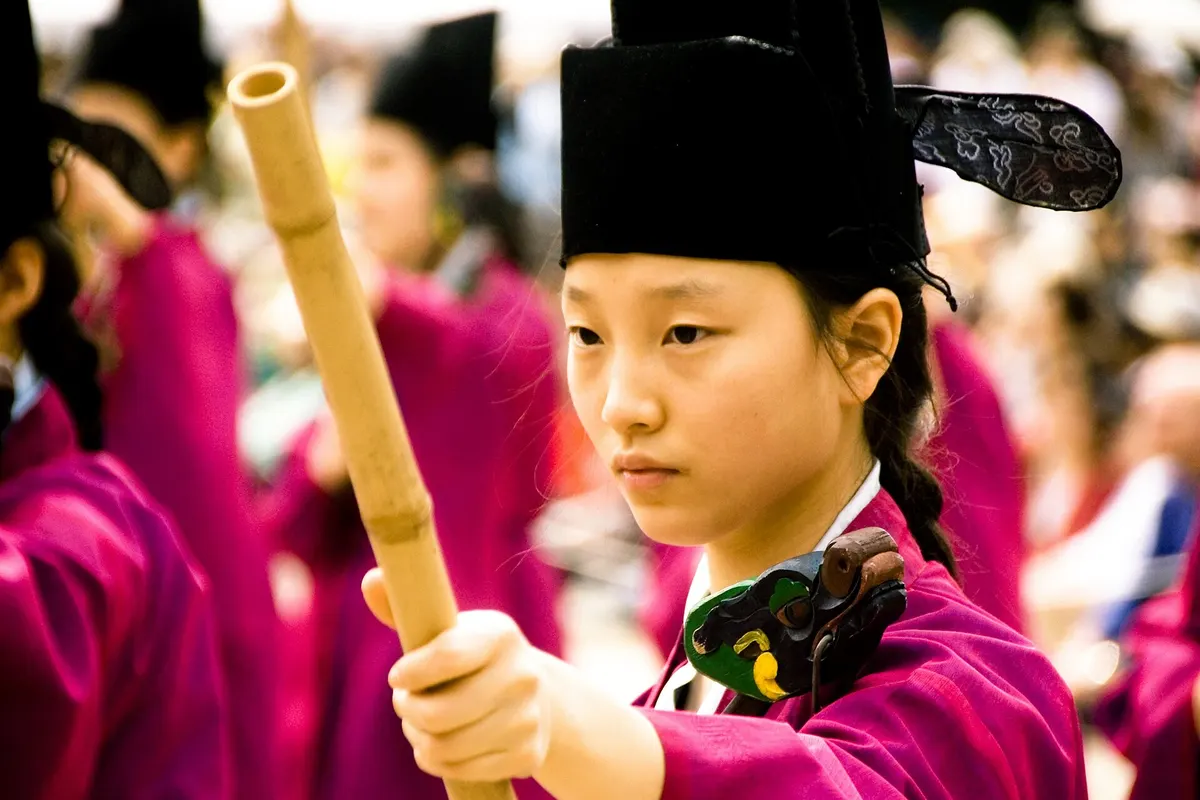
Jongmyo jerye honours the Joseon ancestors with offerings of food and wine, song, dance and music. UNESCO notes the music is played on traditional instruments such as gongs, bells, lutes, zithers and flutes, and the ritual is held once a year, on the first Sunday of May, organised by descendants of the royal family. The words of the rite are spoken in the Korean pronunciation of Classical Chinese, not modern Korean. Wikipedia lists the two musical suites, Botaepyeong and Jeongdaeeop, which accompany the civil and martial dances. The music is performed by the Jeongakdan of the National Gugak Center.
Dancers and symbolism
The ritual dance is called ilmu, or line dance, and the ceremony features sixty-four dancers arranged in eight lines, a form UNESCO says represents yin and yang. The civil dance goes with Botaepyeong music and begins with a step to the left; the martial dance goes with Jeongdaeeop and moves to the right. The civil dancers hold a flute and a pheasant-feather tasselled bar, while the martial dancers carry wooden swords and spears, say the descriptions on Wikipedia. The photograph on this page shows one dancer with a flute-like prop in the Jongmyo rite.
How it differs from a hanok-room show
The two experiences are siblings, not twins. Jongmyo jeryeak is ritual music for ancestors, performed once a year with dozens of participants, and it was designated by UNESCO as a masterpiece before the 2008 listing. A hanok-room performance is a one-hour concert for a handful of guests, closer to banquet music than to ritual. Wikipedia lists hyangak, Korean court banquet music, as the most prominent of three court genres, with instruments including the geomungo, gayageum, piri, daegeum and janggu. If you enjoy the small room, the great shrine is the larger world behind it.
Visiting without the ritual
You can visit Jongmyo Shrine on a normal day to see the Jeongjeon and the long stone courtyard in the photograph, though entry arrangements are best checked with the shrine itself before you go. The ritual only happens on the first Sunday of May, so a visit at another time of year means the buildings and not the music. For the music, a small hanok-room performance is the more reliable way to hear Korean court instruments on the date of your choice, and it is the reason this site recommends pairing the two.
Frequently asked questions
When is the Jongmyo ritual held?
Once a year on the first Sunday in May, according to UNESCO.
Is the Seoul performance the Jongmyo ritual?
No. It is a one-hour concert in a hanok-style room that recreates a banquet atmosphere. Jongmyo jeryeak is annual ancestral ritual music.
Is Jongmyo a UNESCO site?
Yes. The shrine became a World Heritage Site in 1995, and in 2008 the ritual and its music entered UNESCO's list of intangible heritage.
Sources